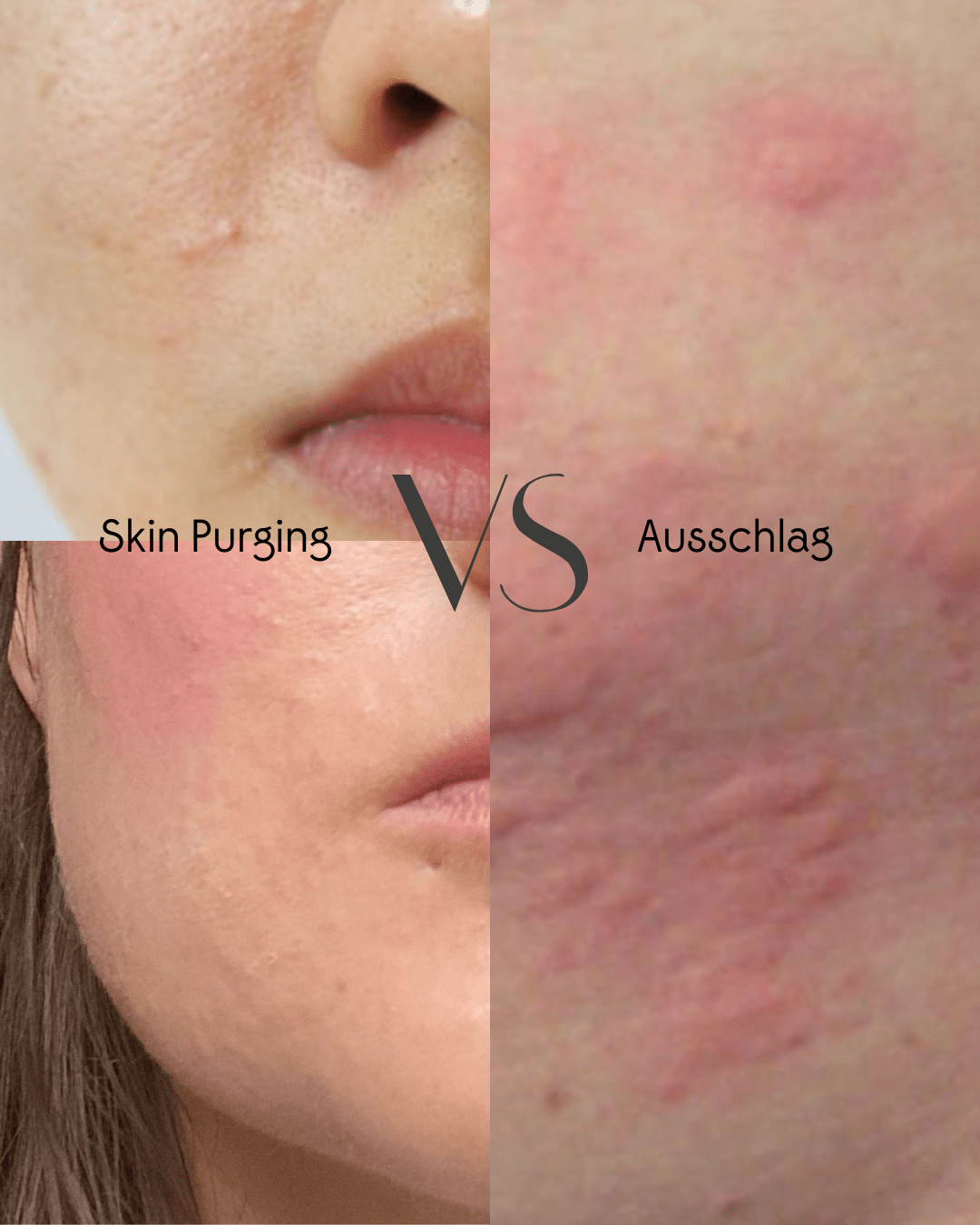

Rosacea is a chronic inflammatory skin disease that primarily affects the face. It is typically characterized by redness, visible blood vessels, pustules, and increased sensitivity. The skin barrier is impaired, and the skin reacts hypersensitively to internal and external stimuli – including cosmetic ingredients.
Proper skincare is not just a complement to medical therapy for rosacea; it is often a crucial component for long-term improvement. In this article, I will show you which ingredients truly benefit your skin – and which ones you should avoid.
These ingredients help with rosacea
Niacinamide (Vitamin B3)
Niacinamide has an anti-inflammatory effect, strengthens the skin barrier, and can significantly reduce redness. Studies confirm that it calms the skin, improves moisture, and even reduces skin reactivity long-term. A true all-rounder for rosacea.
Azelaic Acid
Azelaic acid has antibacterial, gently exfoliating, and anti-inflammatory properties. In higher concentrations, it is prescribed as a medical preparation for rosacea, but even in low-dose skincare products (e.g., 1%), it has a mild anti-inflammatory effect and is well-tolerated.
Panthenol (Provitamin B5)
Panthenol calms irritated skin, supports regeneration, and provides lasting moisture. It helps the skin recover after an acute flare-up and improves overall skin comfort.
Centella Asiatica (Tiger Grass)
This plant extract contains soothing and regenerating active ingredients such as madecassosides. They help to reduce inflammatory processes and strengthen the skin barrier. Ideal for stressed, sensitive skin – typical of rosacea.
Ceramides
Ceramides are natural lipids that are an important component of the skin barrier. They help prevent moisture loss and protect the skin from external irritants. Regular use can sustainably strengthen the skin.
Green Tea Extract
Green tea contains powerful antioxidants like EGCG, which have anti-inflammatory effects and can mitigate vascular reactions. This helps to reduce redness and calm the skin.
Tremella Fuciformis
Tremella fuciformis, also known as silver ear mushroom, is excellent for rosacea-prone skin: The mushroom has intensely moisturizing, antioxidant, and anti-inflammatory effects without irritating the skin. Its natural polysaccharides bind water similarly to hyaluronic acid but are often even better tolerated. Thus, Tremella is an ideal choice for dry, irritated, and sensitive skin with rosacea.
Other Antioxidants (e.g., mild forms of Vitamin C aka derivatives, Vitamin E, Superoxide Dismutase)
Antioxidants neutralize free radicals that can exacerbate inflammatory processes in the skin. Gentle forms of vitamin C, such as 3-O-Ethyl Ascorbic Acid or Tetrahexyldecyl Ascorbate, are particularly suitable for rosacea as they are well-tolerated. Vitamin E (tocopherol) and enzymes like superoxide dismutase (SOD) also soothe the skin and protect against oxidative stress without causing additional irritation.
Retinal (Retinaldehyde)
Retinal is a milder but effective form of vitamin A and is considered a great (and perhaps even better) alternative to retinol – especially for sensitive or rosacea-prone skin. It works against fine lines, strengthens skin structure, and simultaneously has an antibacterial component without causing the typical irritation of classic retinol. Important: Introduce retinal slowly and choose well-tolerated formulations.
Retinaldehyde Alleviates Rosacea
Subject Area: Dermatology, Immunology and Allergy
Marie-Pierre Vienne; Nicole Ochando; Marie-Thérèse Borrel; Yvon Gall; Christophe Lauze; Patrick Dupuy
Dermatology (1999) 199 (Suppl. 1): 53–56.
Licorice Root Extract
Dipotassium Glycyrrhizate is a skin-soothing active ingredient derived from licorice root, which is very well suited for rosacea. Studies show that it has anti-inflammatory effects, reduces redness, and improves skin hydration. In a 56-day clinical study involving rosacea patients, a serum containing this active ingredient led to significantly less redness, more stable moisture balance, and a stronger skin barrier – all without side effects (Source). This makes Dipotassium Glycyrrhizate an excellent choice for sensitive and reddened skin.
These ingredients you should avoid with rosacea
Alcohol (denat.), Ethanol
Alcohol-containing products severely dry out and further irritate the skin. They can weaken the barrier function and promote inflammation. Especially with toners or gel products, it's worth checking the INCI list.
Menthol, Camphor, and Eucalyptus Oil
These cooling ingredients provide a fresh feeling short-term but can worsen skin redness or even trigger a flush in rosacea. They are too irritating for sensitive skin types.
Fragrances and Essential Oils
Whether synthetic or "natural" – many fragrances can cause irritation or allergic reactions. These include, for example, citral, limonene, lavender oil, or geraniol. For rosacea, it's best to consistently use fragrance-free products.
Sodium Lauryl Sulfate (SLS)
SLS is an aggressive surfactant frequently used in cleansing products. It not only removes dirt but also valuable lipids – thus weakening the already sensitive skin barrier. Milder alternatives like Coco-Glucoside are more suitable.
High-Concentration Retinol
Retinol is an effective anti-aging ingredient but can lead to irritation and worsening of skin conditions in rosacea. If you don't want to forgo its effects, you can use Bakuchiol – a plant-based retinol alternative with significantly better tolerability.
High-Dose Fruit Acids (AHA/BHA)
Acids like glycolic acid or salicylic acid can excessively irritate the skin and worsen redness. For rosacea, they should be used with caution. If at all, then only in very mild concentrations or replaced by gentle PHAs like gluconolactone.
Witch Hazel
Witch hazel is often used in natural cosmetics for its astringent and anti-inflammatory properties. However, this ingredient should be used with caution in rosacea. The tannins, essential oils, and often added alcohol it contains can severely irritate sensitive skin. Since the skin barrier in rosacea is already weakened and overreacts to external stimuli, witch hazel can increase redness, cause burning, and long-term enhance skin reactivity. Witch hazel water (Hamamelis Virginiana Water), found in many toners and facial waters—often in combination with alcohol—is particularly critical. Therefore, it is advisable for rosacea sufferers to avoid witch hazel and instead opt for milder, soothing active ingredients such as Centella Asiatica, Panthenol, or Niacinamide.
Importance of pH Value in Rosacea
The natural pH of healthy skin is between 4.5 and 5.5. Studies have shown that skin conditions like rosacea can be associated with an elevated skin pH, which underscores the importance of an appropriate pH in skincare.
Recommendations for Skincare Products
It is recommended to use skincare products with a pH value in the range of 4 to 6 to support the skin barrier and inhibit the growth of harmful microorganisms. Products with a pH value above 6 can dry out the skin and worsen rosacea symptoms.
Conclusion
A pH value of 4.8 to 6 in skincare products is suitable for people with rosacea. Choosing products within this pH range can help strengthen the skin barrier and reduce inflammation.
How to find the right care for rosacea
-
Use only a few, well-coordinated products.
-
Avoid too many active ingredients at once and the so-called "layering" of several serums, tonics, facial waters, etc.
-
Always test new products on a small area first (e.g., jawline) before applying them to your entire face, and introduce them slowly and carefully into your skincare routine.
-
Look for mild, irritation-free formulations.
-
Pay attention to the correct pH value in your skincare.